December 30, 2025
No Clubs, No Community
By John Myers
By Veralyn Vislocky

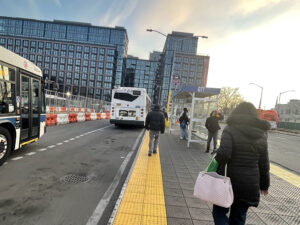
“All Guests Under the Age of 18 Must Be Accompanied by an Adult Monday Through Friday at This Target Store,” reads a sign located at the Target in Brooklyn’s Atlantic Terminal Mall.
Since Covid there has been a lack of teen spaces, whether it be clubs and programs in school or activities and places to go outside. There aren’t many places just catering to teens nowadays. Even public places have also started restricting when and how teens are allowed to enter. Entire malls and shopping centers have enforced similar rules.
“I used to go shopping or get something to eat after school there, but now I’m usually at clubs after school now anyways,” Said Vicky Wu, a student at Brooklyn Tech High School. There happen to be clubs at her school that she’s interested in, which is good for her. But for many other students that isn’t the case. Without any clubs or activities kids are interested in at school, they’re naturally going to look for other activities to do outside. This is why it’s so important to have school clubs, because while there has been a lack of third spaces for teens in the public, schools can provide that for them.
This year, Tahmidul Goffar, a student at Kingsborough Early College Secondary School, with the help of a few teachers, introduced a gardening club. The empty space in the courtyard would be getting put to use, and kids who didn’t want to join a sport or academic-related club had something to turn to. Goffar explained, “School clubs can give students a sense of belonging and purpose, encourage them to get involved and even go to school more in general. They are a low-risk way to explore new things that aren’t strictly academics and sports. They allow you to grow as a person by giving you a space to explore different fields and topics, and most importantly to me, they are an oasis for creating community.”
Participation in extracurricular activities increases students’ involvement at school as well as decreases the likelihood of them struggling or even dropping out of school. According to the National Center for Education Statistics, “students involved in extracurricular activities have more consistent attendance, stronger academic achievement, and greater desire to attend college after high school.” These activities and extracurriculars give students something to look forward to, motivating them to do their work. Even just having a place to go to and hang out with friends can help them be more inclined to do their best.
Goffar added, “With after-school clubs, you get to build relationships with people who could be separated by a million things but become intertwined by one common interest. These are the reasons why I strove to create a gardening club, it’s why I helped organize the debate club, and why I continue to advocate and assist my peers in establishing new clubs, like the music club.”.
School clubs and activities create spaces for students to meet with their peers who have a shared passion. They’re introduced to people they might not otherwise see or be friends with, and without this students may feel isolated. School clubs can offer a place for students to feel welcome when many of them may lack that sense of belonging. Having an escape from the academic pressure that comes with school and just being able to take a break and do something you enjoy is something students need. The absence of this can negatively affect students’ emotional and mental health.
Natasha Delbe is an assistant principal and also a teacher at Kingsborough Early College Secondary School. She deals with clubs on a more professional level as an assistant principal, seeing out all the technicalities and needs for each club. As a teacher she can really see the difference school clubs make in students’ lives on a daily basis on a more personal level.
In Delbe’s words, “In my experience as an educator, school clubs and activities enhance the educational experience for students. It gives students time to spend with classmates and faculty in a non-academic space where they can get to know one another better. In some cases, the time spent at school after the academic day ends provides a safe place for students who would otherwise have spent the time at home alone or unsupervised outside. There are additional benefits such as physical health, extra meals, cultural experiences, positive impact on mental health, and space for self-expression.”
Clubs may also introduce students to a passion, talent, or hobby that they otherwise wouldn’t have known about. They can also open up opportunities and help students discover what career they might want to pursue. Many students might feel like they’re lacking because academics may not be their strong suit, but clubs let them see that there are other options. Leadership, teamwork, and other crucial life skills are also built while participating in these activities. Most colleges want students who are involved and participate in extracurricular activities, so clubs also benefit students’ futures in that regard. It demonstrates their talents to the college beyond just mandatory academics, which wouldn’t be known to colleges without clubs.
Today, Kingsborough Early College Secondary School is building a kitchen for students to explore culinary arts while also giving them access to make nutritious meals. This year there have been more clubs introduced compared to the previous years. Hopefully there will be more to come, because every student deserves the opportunity to find their passions, form bonds, and feel a sense of belonging by being in a club