March 12, 2026
New York City’s Environmental Inequalities: Green Space for All
By John Myers
By Emily Batista
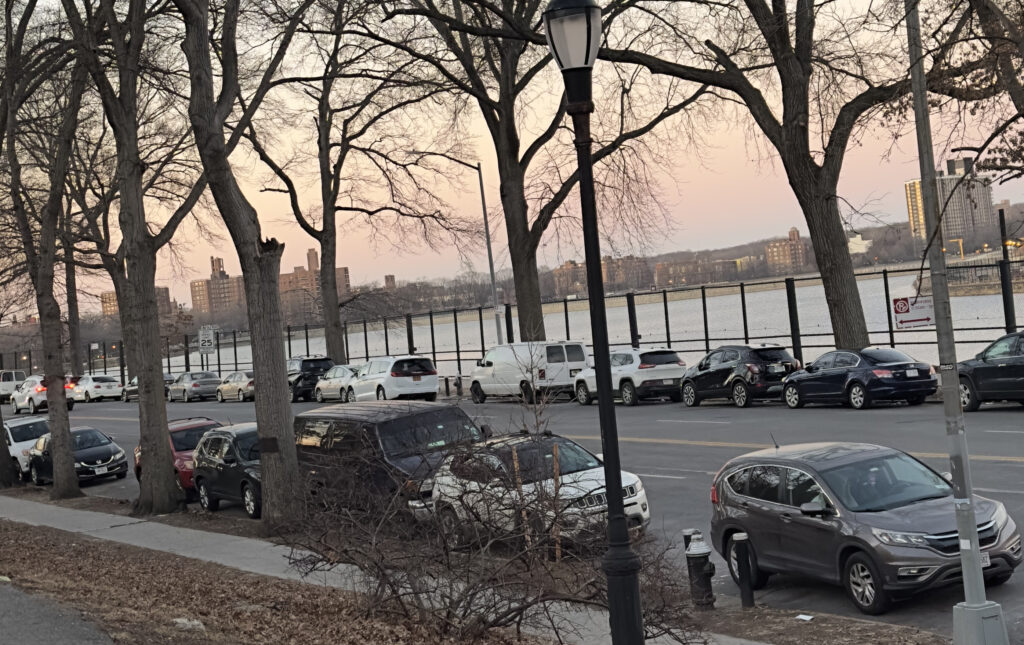
One of New York City’s most identifiable features is its residents’ regard for nature, and how much we appreciate the occasional tree-lined streets and green spaces. If you grew up in New York City, you know that even the slightest warmth can pull people outside. That’s how much green space matters here. In our dense urban community, green spaces have myriad benefits, including improving air quality and contributing to the battle against pollutants. Green spaces are an essential refuge that is key for communities, and are a critical need for health.
In the Bronx, where I live, these green spaces are lacking. Parks get overcrowded quickly, and it’s easy to get overwhelmed with barely any room left to breathe. On a hot day, it seems impossible to escape the city’s suffocating asphalt streets. In my experience, we have too few parks in the Bronx, and we need clean air. Despite how important green space is, it remains scarce in this predominantly Black and brown borough. With many industrial facilities located within the Bronx, it has some of the highest asthma and cancer rates in the country.
New York City is typically viewed as a progressive city with greenery, but it’s disproportionately abundant in certain neighborhoods, and the neighborhoods that need environmental protection are the most ignored. According to the New York League of Conservation Voters, about 22% of tree canopy covers New York City, yet brown and Black dominated neighborhoods have 33% less tree canopy coverage than white communities—and low-income communities have up to 41% less tree coverage than wealthier neighborhoods. This is a result of the already prioritized communities being put ahead of those that lack resources and power.
Take for example Manhattan’s investment in parks and green spaces. Areas such as Central Park and alike provide residents with cleaner air, shade, and a safe space to relax. Affluent areas like Manhattan generally receive more attention, more funding, better infrastructure, and have a comparably higher white population density compared to communities outside of Manhattan. Traveling from Manhattan to the Bronx, the disappearance of greenery is visually striking.
These inequalities exist because residents’ voices aren’t being heard. South Bronx Unite is one of several environmentalist groups advocating around this issue. Its members emphasize the importance of pushing back against environmental racism and for a green-driven economy.
Recently, climate change advocates visited local parks and urged an increase in park budgets, highlighting the pressing need to address environmental neglect. As reported on News 12, one of founding members of South Bronx Unite, Mychal Johnson, said, “Invest in our parks, invest in our people. To have more recreation and healthier outcomes is super important, and we want the next mayor to understand that need.” In the Bronx, green spaces that exist are often poorly maintained, crowded, or just small. Advocating around this issue puts the burden back on the city’s administration to fund programs like Trees for NYCHA and enact policies like Local Law 148 to address these longstanding issues.
Rather than reinforce historic racial and economic divisions, environmental policies, like regulating emissions from cars and factories, should lessen them.
This inequity requires action. New York City can close these funding gaps to maintain and support development projects and groups like South Bronx Unite to ensure that these neighborhoods and the people within them have the ability to thrive.
Environmental protection shouldn’t be a privilege—and it shouldn’t be disproportionate. These green spaces and clean air policies should be available to the communities that need them the most. Until New York City acknowledges this historical bias within its outlying neighborhoods, its progressive image will just remain a front to hide the harm done to residents who bear the brunt of these inequities.