March 12, 2026
How the Morning Shapes the Mind
By John Myers
By Alisa Uchaykina
(Paper Trident)
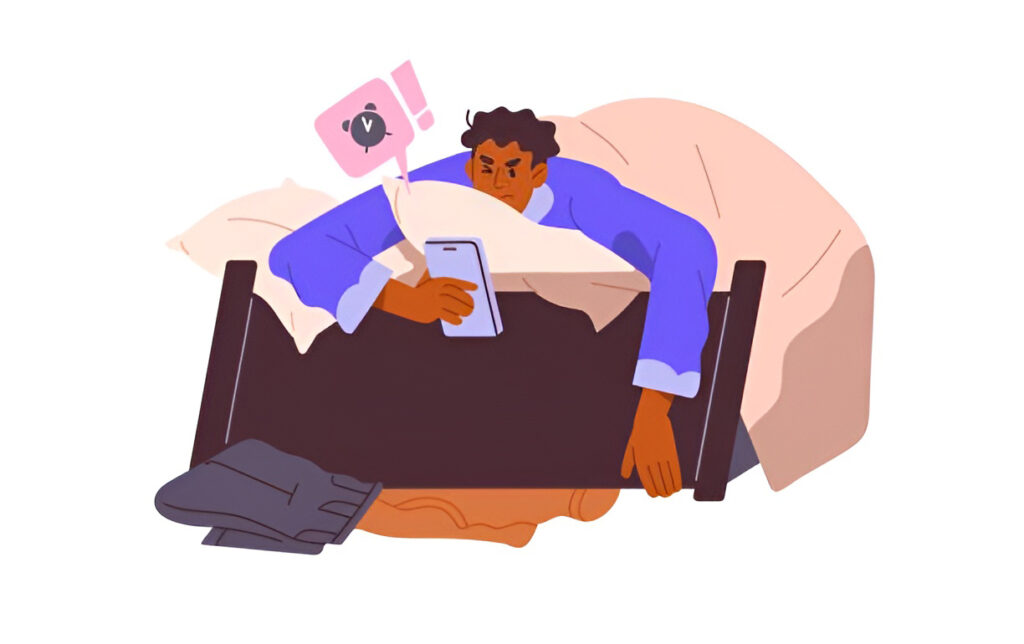
Early morning. The alarm clock rings loudly. You get out of bed, pick up your phone, turn off the alarm — but the phone stays in your hands. You start checking new notifications, reading the news, scrolling through social media feeds, and the first 10, 15, 20, or even 30 minutes of your morning pass this way. I think many of us can relate — it has been considered normal for a long time now.
But what kind of effect does this have on us? I’d argue that it sets a restless and unfocused tone for the day even before it begins.
Morning is the start of the day not only physically, but also psychologically. In the first minutes after waking, the brain goes through a state known as sleep inertia — a short period during which attention, self-control, and the ability to filter information are temporarily reduced. A study published in PLOS ONE, 2026, found that sleep inertia is associated with factors such as anxiety and reduced cognitive control, as this is a time when the brain reacts more strongly on an emotional level. When emotionally charged content such as news, social media comparisons, and notifications is consumed during this vulnerable window, it can have a disproportionate impact on mood and anxiety.
Teenagers and children are particularly vulnerable in this context, as their frontal lobes and personalities are still developing. At this age, people are especially prone to imitation and social comparison. According to research published in Cognitive Psychology News Journal, 2025, the prefrontal cortex — the part of the brain responsible for executive functions like judgment and emotional regulation continues to mature into the mid-20s, meaning teenagers have less capacity for behavioral self-regulation than adults. When their day begins not with reality, but with idealized images, other people’s achievements, and imposed standards from social media, it can create a persistent sense of inadequacy even before the day has truly started and reduces their ability to concentrate. Energy that could be directed toward self-development is instead spent on constant comparison with others.
As someone who uses their phone every morning, I decided to completely give it up in the mornings for a week — except for turning off the alarm, of course. At first I forgot about this new rule due to my ingrained habit. But once I remembered, I quickly put the phone aside and returned to my morning routine.
My morning routine starts with getting up, brushing my teeth, and doing light stretching and exercises. I then make breakfast with matcha or coffee. About more than thirty minutes after waking up, I sometimes use my phone while eating if needed — for example, to plan my day, do schoolwork, or intentionally watch something rather than scroll. This part of my routine stayed mostly the same during the experiment. After breakfast, I get ready and leave for the day.
Mornings started to feel calmer and quieter. I didn’t see the news, the lives of bloggers and celebrities, or any other unnecessary information. I had more time to think about my day, my plans, and myself. My state of mind became noticeably more pleasant.
After a week of this experiment, I consciously choose to continue not to use my phone in the mornings and generally try to minimize its use throughout the day. This really improves my mental state and makes me more productive. I recommend everyone try a similar experiment — it will definitely do no harm.
My experience, however, is only a small glimpse of what many people face every day, often without even realizing the source of the problem. In this context, the example of Australia’s recent legislation is telling: authorities there took strict measures to protect its young people. In late 2025 and early 2026, the country introduced a world-first law restricting children under 16 from creating social media accounts. These measures aim to reduce the risks of cyberbullying, body image issues, exposure to harmful content, and serious mental health consequences, including depression and suicidal thoughts.
Such steps may seem excessive or radical. However, the very fact that they were introduced shows the scale of the problem, which can no longer be ignored. And although government regulation is one possible approach, perhaps the simplest first step is to regain control over how our own mornings begin.
As the saying goes, better late than never. Sometimes the most important step is simply not giving your morning to the screen, so remember to take care of yourself — you might find that is exactly what you need.