March 12, 2026
The Cost of Connecting: Should High Schoolers Be Using LinkedIn?
By John Myers
By Brianna Sylvain
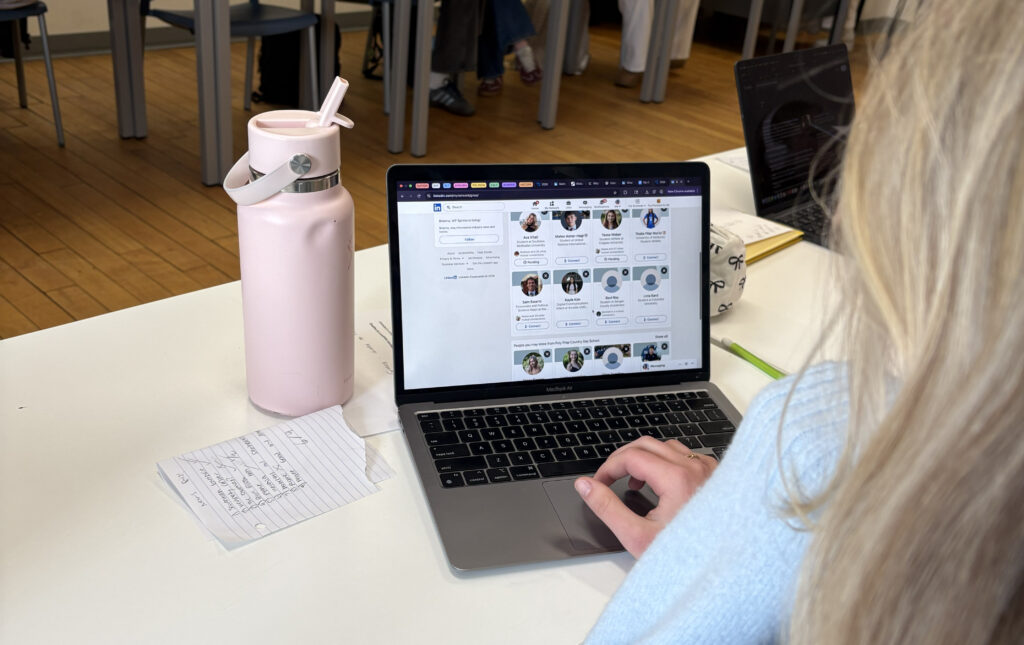
My dry eyes lazily drifted as I sat up in bed, with my computer before me. Everything in my body told me to go to sleep, yet my index finger remained positioned on my keyboard’s ‘down’ arrow–its routine presses continued the scrolling on my screen and halted my body from surrendering to its exhaustion. I was caught in the infamous doomscroll, an activity I engage in more often than I would like to admit. On my screen wasn’t the traditional short-form content of platforms such as Instagram or TikTok. Strangely enough, I was on Linkedin, which is not considered Gen Z’s social media of choice. As I mindlessly sent invitations to connect with people I barely knew and stalked my peers’ “work experience,” I was semi-conscious of the fact that I engaged in the most sterile form of networking there is. “LinkedIn is a platform for anyone who is looking to advance their career,” according to LinkedIn’s official website. My classmates and I signed up for LinkedIn because it felt like the next, necessary progression as we think more about our futures and lives beyond high school. However, I don’t think this is a change for the better. LinkedIn requires us to think pre-professionally. It rewards passionless networking and connection-making that can lead to engaging in a toxic work culture that places an emphasis on transactional relationships.
A 2025 study published in the academic journal Internet Research examined the psychological effects of LinkedIn among university students and found that the platform promotes well-being through its “support of students’ basic psychological needs for autonomy, belongingness and competence.” Conversely, the study also reported that “LinkedIn is also found to generate stress – driven by excessive demand and privacy threats – which undermines intrinsic motivation.” During my time on LinkedIn, I’ve experienced both of these results: I have loved being able to do research on figures and institutions that I admire and am interested in but, I have also gone into anxious spirals where I overly compare myself with my peers on the platform.
LinkedIn has a myriad of features aimed at helping users navigate networking, strengthen relationships, and develop pre-professional skills, the most notable probably being connections. Connections on LinkedIn are kind of similar to the “follow” on other platforms. However, I would argue that they carry a different weight as it’s through connecting with people on the app that you’re able to form your network. I’ve seen how this feature has permeated the culture of my school. There have been many times where I’ve opened my email inbox and have been met with invitations to connect with people I barely know or interact with. It’s a weird feeling to be “connected” with someone on Linkedin but walk past them without a second thought whenever I see them in real life. I’ve also been on the other end of these invitations, more focused on developing a so-called network than being intentional about the people that are actually in it. I’ve found that my classmates and I often equate the value of our profiles with the quantity of connections instead of their quality.
Part of LinkedIn’s goal is for users to “learn the skills you need to succeed in your career,” according to their website. The platform is used by individuals across a variety of demographics. According to Statista, as of October 2025, 20.5% of users are between the ages of 18 and 24. The presence of younger people makes LinkedIn an early and formative site for professionals. In fact, LinkedIn actually encourages younger groups such as teenagers to use the platform. LinkedIn invites teenagers to use the platform to begin forming their “personal brand,” according to their website. They continue to state that that platform can be used to “connect with friends, classmates, teachers, and anyone else who could potentially help you in your career. You never know where an opportunity will come from.”
An emphasis is being placed on accumulating connections and curating a profile. If LinkedIn is meant to provide us with necessary resources to embark on or further our careers, what does that mean for my and my classmates’ futures? Will this transactional networking that feels automated and inauthentic follow us for the rest of our professional lives?
While I have experienced the benefits of LinkedIn, I have also noted these drawbacks. Perhaps as I grow older my relationship with the platform will shift and I’ll have more appreciation for the aspects of the platform I dislike now. Still, I implore everyone to not limit their futures or networks to their LinkedIn profile. We are not a sum of our connections and posts.