March 12, 2026
With No Clear Rules on AI in College Classes, Students Make Their Own
By John Myers
By Veralyn Vislocky
Fear is instilled in high school students every time they hear the word “college.” Whether it’s teachers assigning an unnecessary amount of work with the excuse of “preparing you for college” or the idea of having to fill out college applications, nothing you have to do in high school related to college is fun.
My first time being on campus in a college class was in September 2025. I was nervous, to say the least, about how I would be able to keep up and how my work would compare to other students’ work, especially because it was an English class. In high school, teachers often say, “That won’t slide in college.” So when we began to go over the syllabus and look at all the rules and expectations, my nerves only got worse. But then in the middle of class, the teacher started talking about plagiarism, and a student asked, ”So, can we use AI or not?”
I looked over at my friend who was also a high school student taking college classes, my face showing my confusion. Normally, it goes without saying that AI use on work is not permitted. At least, that’s how it is in my high school classes. As I looked around and noticed my feelings of confusion weren’t shared among my classmates, and that the teacher didn’t outright dismiss the question, I realized something. College is really different from high school, but not in the way I had thought.
In high school, the rules about the use of AI on schoolwork are pretty straightforward and put in place no matter which teacher you have. The policies around AI are school-wide, so no one can claim they got confused or didn’t know they weren’t allowed to use it. Sure, students still do use AI, but teachers aren’t as open to it, and it’s clear that it’s not allowed.
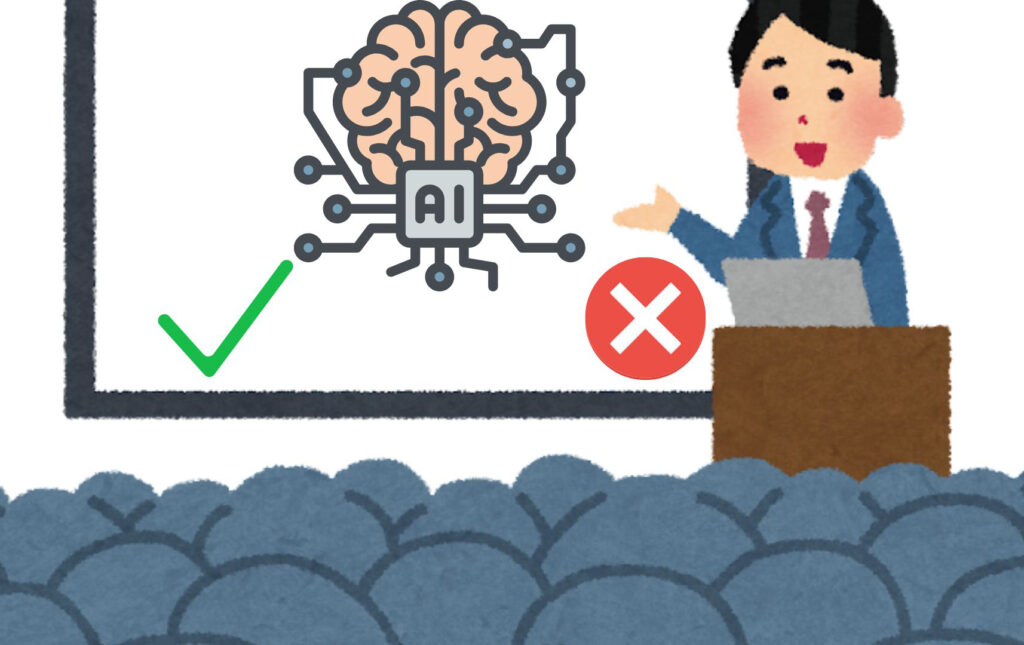
In college, the professors seem to have a lot more leeway in what they do and don’t permit. There isn’t a guarantee of a campus-wide policy like there usually is in high school. Some professors are fully against AI use and state that multiple times, usually both on the syllabus and in their lectures. Some professors are fully for it and make it known with the clear use of AI in their lessons or encouraging students to use it to make practice exams and summarize texts. And some professors are somewhere in the middle, they might use it but not want students to, they might allow students to use it on some assignments but not on others, or many other variations.
This may also raise the question of why should students even stop using it in the first place. In AI in Higher Education: A Meta Summary of Recent Surveys of Students and Faculty, David Mulford states that “A global survey by the Digital Education Council found that 86% of students use AI in their studies, with 54% using it weekly and nearly one in four using it daily.” If 25% of students are using it daily, they’re most likely to become reliant on it. This can lead them to lack critical thinking, lose motivation, and be unable to do work on their own.
Say every day you have to take a long, treacherous walk home. It’s a journey, but you have to get it done. Now say that you’re permitted to use a shortcut to get home, but only in this one instance. There’s nothing preventing you from using it again, but you’re just told not to. The next time you go to take the normal route home, it’s going to feel extra long and annoying because you just got to experience the shortcut. After that, you might begin to occasionally use the shortcut, making the excuse you were extra tired and busy those days. The next thing you know, you’ve been using the shortcut every day and have even forgotten what it’s like to not use it.
I think that there need to be more clear-cut rules about AI in college classes. According to a comparative analysis of artificial intelligence policies in universities across five countries, 39% of universities did not present a stated rationale for AI policy. There’s no way students are going to stop using it if there are no clear rules or consequences for doing so.