June 9, 2026
Metropolitan Park: How It’s Targeting Asian Americans
By John Myers
By Jeffrey Wang
In the heart of Queens, New York, lies Citi Field, home of the New York Mets. The stadium is surrounded by vast swaths of asphalt pavement that residents mostly use as parking lots.
Dubbed “Metropolitan Park,” the space once occupied by Honda Civics and children playing will soon house an eight-billion-dollar casino and entertainment complex. Developers of the project, most notably billionaire Mets Owner Steve Cohen, claim that it will bring 23,000 jobs to the community and transform 25 acres of asphalt into public park space. Their website lists five pillars of the plan that includes: transportation, jobs, park space, entertainment, and a dining hall, with the goal to modernize and bring investment into the area.
However, despite the seemingly positive reactions among many city officials and businesses, residents have mixed feelings. Some city officials and residents argue that the park will generate substantial revenue for schools and local businesses, while others highlight the negative impact that specific parts of it—like the casino—will have on the surrounding community. Critics of the development, including the Queens Anti-Casino Group, argue the casino doesn’t belong in the community and could potentially harm families and damage the image of Queens. Those in opposition argue that when $1.68 million is spent by billionaire donors lobbying for their cash cow, the community will suffer. One Flushing resident, Shirley Cai, stated, “When I see members of my community, especially the elderly, going to the park or underground gambling holes to blow their money (often with games like mahjong), I don’t feel good. I think creating a casino is just going to promote more gambling and make the problem in our community worse than it is.”
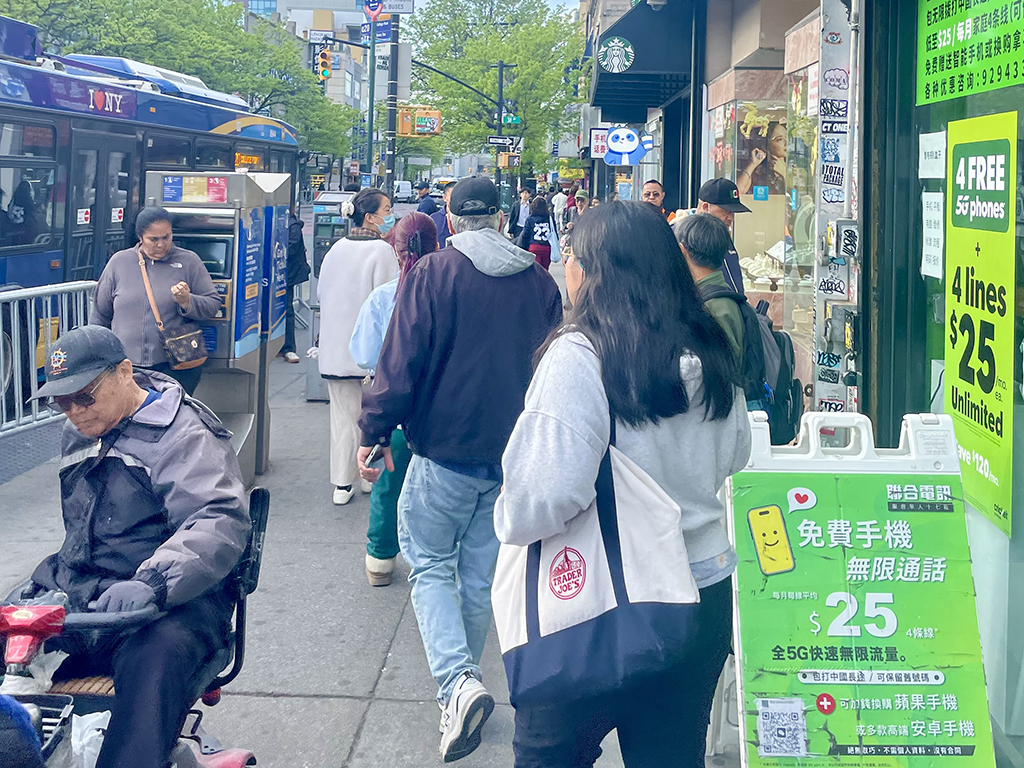
To understand how this development will impact the residents and surrounding communities, it’s important to look at the demographics of the area. Flushing is home to a large Asian American population, which, as a result of a mix of rugged advertising from corporations, some cultural aspects, and socioeconomic factors that include social isolation, language barriers, plentiful leisure time for older adults—due to lack of need for child care as a result of differences in American childcare culture—and high stress due to long working hours, often fall victim to this cycle of self-harm. According to a 2022 study, which studied the impacts of gambling on Asian American populations across the greater northeast region for the purpose of examining the stereotype of “Asian Gambling” and its root causes, the primary motivations for gambling were quick cash/wealth, escaping poverty and improving financial situation, and stress relief. It noted that for older individuals, it was portrayed as a fun way of socializing, especially because of increased linguistic and social isolation. As a result, similar community opposition against casinos have been seen in these areas in major cities with large Asian populations like Boston and Philadelphia.
The manner in which these types of gambling enclaves are advertised is also an issue, with many of these places branding themselves as low-risk and “fun.” In an interview with a staff attorney working with the Asian American Legal Defense and Education Fund, it was stated that “Metropolitan Park already demonstrated that it is interested in targeting Asian patrons by constructing a themed ‘Fortune Pavilion’ that will offer Chinese gambling games.” Beyond false advertising and coercion, understanding why gambling is such a destructive but often overlooked form of self-harm, is important when considering the impact of these establishments. Divorce, financial difficulties, child neglect, an increase in domestic violence, and higher rates of suicide are all common impacts of chronic gambling. According to the same study (Colby et al, 2022), researchers found that 55% of interviewees faced domestic violence as a result of gambling problems, and 15% stated that suicidal thoughts were an impact of addiction. 75% of the respondents stated that their children were affected by their gambling addiction, and 45% stated that it resulted in a separation/divorce. While gambling remains an issue in many Asian American communities, the stereotype of Asians gambling is often exacerbated by media and business to promote the development of casinos in lower income and immigrant communities. All this is to say that gambling isn’t a problem in these communities solely because they are Asian, but rather a combination of different issues that includes stereotypes and other aspects of their experience.
Another issue that isn’t often talked about is how the development would raise the cost of living in the areas surrounding it and the lack of legal mechanisms in place to enforce the “community benefit agreements” promised by the developers to community members. Especially in New York City, gentrification is quickly becoming an issue, with lower-income communities being priced out due to rising costs often associated with new developments. According to the Urban Displacement Project, 12% of neighborhoods in NYC are in an advanced state of gentrification, with 8% of low-income households living in moderate to high-income areas that are experiencing advanced stages of gentrification.
Though the majority of opinions surrounding the development are largely negative, some believe that it will contribute to the community and the effects may not be as bad as those in opposition seem to portray it as. One Flushing resident, Prudence Li, says, “I’m not a gambler myself, but I’m not opposed to it. People should be able to have fun and spend their money how they want.” Many community officials have also stated support for the project, with Queens Borough President Donovan Richards approving the plan, citing the creation of jobs and revenue from tourism.Despite these promises, members of the community still insist that the that area should instead be developed into a community space, one that serves the community, not corporate interests.