October 28, 2026
Why Don’t Jamaican Americans Wear Bandana Dresses?
By Quinn Dwyer
By Dejennay Dehaney
Growing up in the Bronx, New York, I have become familiar with a variety of cultures and have seen firsthand the pride people feel about their countries and heritage—in parades, the making of artwork, in dance, and social gatherings—and publicly displaying their love for their respective cultures.
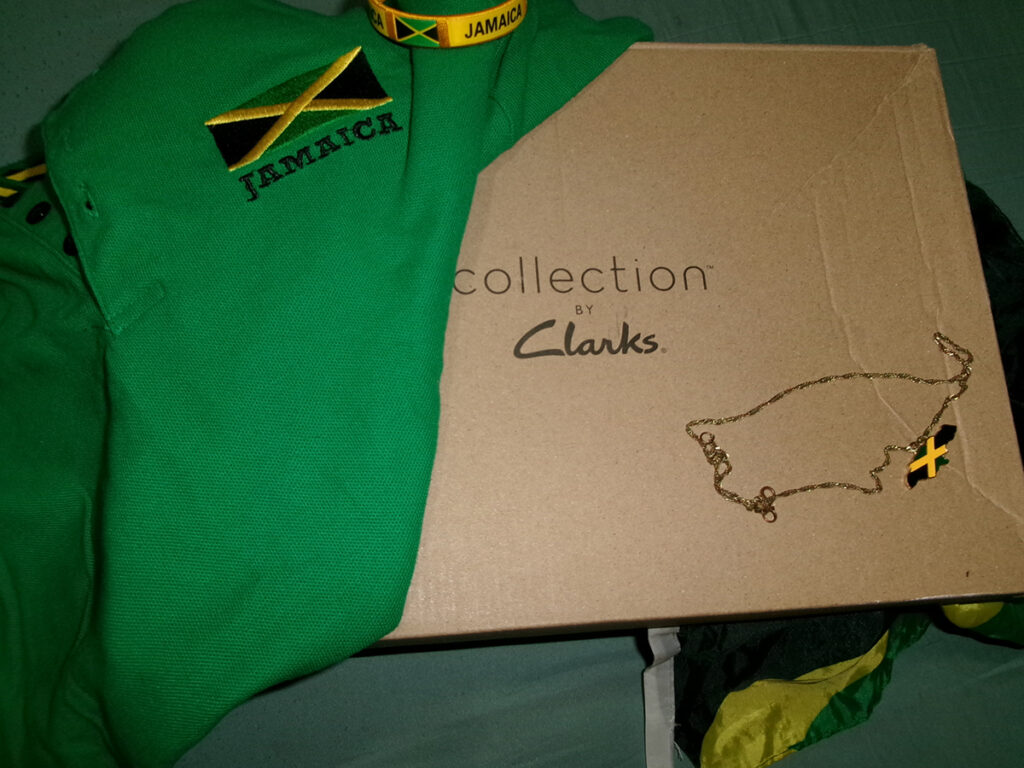
In schools it is common to host a culture day as a part of spirit week celebrations. During this time, you’ll see students representing their cultures by wearing El Baile del Perico Ripiao, a traditional dress and Ghanaians in clothing made with kente. You’ll see Jamaicans in various articles of clothing with the Jamaican flag and the iconic picture of Bob Marley printed on the front. It is not that Jamaicans do not have cultural clothing; we do. We have quadrille clothing that has been traditionally worn in our culture for years. So why is it that many Jamaicans at home and abroad do not wear our traditional clothing? Is it expensive? A lack of knowledge? The prioritization of certain aspects of the culture?
According to the Jamrock Museum, a virtual museum dedicated to preserving and celebrating Jamaican culture and heritage, the quadrille is the Jamaican traditional dress, also known as the “Bandana costume”. Additionally, “The dress’s origin and cultural influences blended West African textile tradition with those of Europe in the Victorian era. The key material used was madras cloth, which has origins in India and was brought to the Caribbean through trade.” Quadrille clothing serves as a visual representation of the nation’s motto “Out of many one people,” and it is symbolic of the manner in which we share and embrace our traditions with those who have become integrated into our culture.
I’ve always wanted to wear a Quadrille dress for Culture Day, just like how I used to when I was younger and living in Jamaica. I longed to represent my culture in the same manner as other members of the black diaspora. After years of searching, in June of 2026, I saw a quadrille skirt in the wild for the first time. It was being sold by a vendor who I saw by chance on the way to the gym.
I asked her, “How much for the skirt?” and she replied, “Hundred Dalla, but if yuh want e mi can gi yuh fi less” (a hundred but if you want it I can give it to you for less).
Absolutely flabbergasted by the price, I politely declined and went to the gym.
After the skirt incident, I wanted to investigate whether or not other West Indians shared the experience of not seeing our traditional attire represented. This led me to my friend and classmate Aja. Aja is Guyanese and has been in the United States for 12 years. Ethnically, she is mixed Indian and Afro-Caribbean. On our way to the train station I asked her, “Do you know what the traditional clothing of Guyana is?” She replied, “I’m mixed with two different sides, so one part of my family, they do saris and stuff, because they’re Indian, and then another part I’m not really that familiar with.”
Afterwards, I told her about my research on the quadrille dress pattern, on the colors used in Guyana and their significance. I wanted to know if she felt the same way I did about the representation of quadrille. She informed me that “I’ve never really thought about it like that before, but sometimes it’s harder to find because shops don’t have access to that type of material and it’s more expensive. ”
Aja’s mention of tailoring and access to resources seemed like a likely explanation for the phenomenon, but to check the validity of this theory I decided to speak with some other vendors directly. To do so, I went to Whiteplains Road, an entire street filled with West Indian culture, from restaurants and clothing vendors to people driving by with dancehall blasting from their speakers. On the corner of White Plains Road and Nereid sits Marcus, a Jamaican clothing vendor from Negril, Westmorland. In my conversation with Marcus, we talked a lot about how he began his business in America by throwing a party and selling shirts using his sales experience from Jamaica. He explains that he sold his leftover shirts in barber shops and salons and grew his business little by little. He says, “Mi start out wid a likkle shoppin cart and a bag and see mi dey ya now.”
Marcus then explained that he imported handcrafted beadwork and vibrant dresses from Jamaica, but got his t-shirts from a vendor who sources them in Pakistan. His mention of selling both handmade and mass-produced clothing made me curious as to why he didn’t sell quadrille dresses. To that question he said, “Jah yuh know mi wah some?” (God, you know I want some?) This response surprised me because of my inability to find the dress in the long period of time I’ve been searching for it. I told Marcus as much, and like the hustler he is, he immediately offered to buy some and contact me when they are available for purchase. I asked him how much it would cost him and he said, “About $50 because I’d buy it for about $20 USD in Jamaica,” which is a stark contrast to the $100 I was quoted for just the skirt.
While my interview with Marcus was informative, it left me with a lot of questions. If the problem isn’t a lack of availability, what is it? Is it that Jamaican Americans are not aware of or interested in bandana dresses?
To answer these questions I asked my schoolmate Octavia Green, a Jamaican American, about how she felt about cultural expression. When asked how connected she feels to her culture, she replied that “My connection to my culture is not very strong at all.” I also asked about her perspective on Culture Day, to which she replied, “When Culture Day comes, it’s an awkward experience; I don’t know what to do, wear, or say because I’m not very knowledgeable about how to interact with my culture.” She went on to explain that she doesn’t understand or speak Patois even though she’d like to. She says the reason for the disconnect she feels may be related to her mother being busy with work and not being able to assist her with connecting to her culture. Despite these challenges, she says that “I connect to my culture through the Jamaican food my mom cooks and through music.”
From learning about Octavia’s experiences, I came to realize that while wearing a bandana is less common, the pivot from tradition does not degrade our culture. The symbolism of the flag itself is a testament to the same values that the bandana and our culture as a whole embody. According to the National Library of Jamaica, a digital library dedicated to the preservation and promotion of Jamaican culture, “The official interpretation of the Jamaican National Flag is ‘The sun shineth; the land is green; and the people are strong and creative.’” The Jamaican flag was plastered all over the t-shirts of New Yorkers of all backgrounds in Brooklyn on August 8th at New York City’s first annual Jamaican parade. While there remains concern about the lack of knowledge about Jamaican traditions among Jamaican Americans, it has been made evident that the culture continues to adapt and be celebrated.