October 28, 2026
Food Insecurity and Unaffordability in America: The Constant Struggle
By Quinn Dwyer
By Sanaii Coke
Suzie Robinson typically enters CTown in Brownsville, Brooklyn, just after receiving her paycheck. She’s a Caribbean mom and has one son. It’s time to go grocery shopping and she has a tight budget she wants to stick to, attempting to buy enough groceries for the week. She roams the aisles looking for the things she needs and decides it’s easier to go straight to the meat aisle.
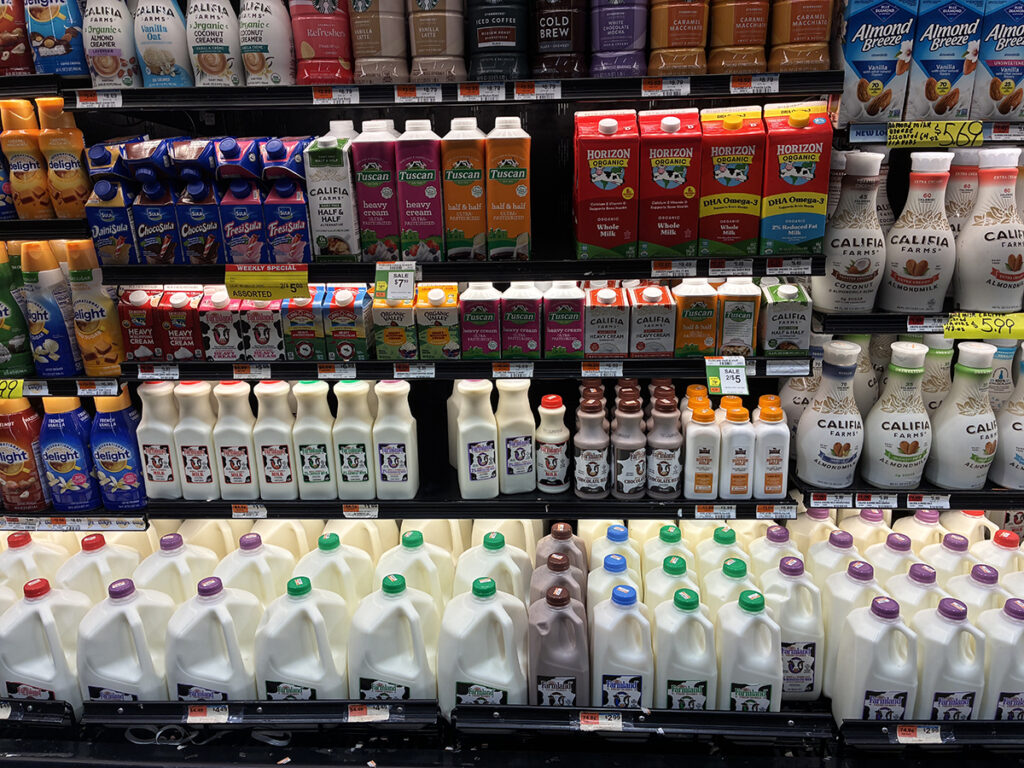
A pack of two pounds of drums and thighs costs $11.21, and she’s trying to feed a family of three. One pack may satisfy everyone for the day, but she wants to have leftovers so she doesn’t have to cook the next day–$24.43. Breakfast foods are up next, and she wants to buy bacon and eggs. The eggs are almost $4 depending on the size, which is fine, but as she roams the meat aisle looking for bacon she sees that the price of one pack is $12.99. Do I really need bacon? Suzie thinks to herself as she weighs her options. She decides it’s not worth it and settles on some cereal instead. She goes to the dairy section. Usually she purchases whole milk, it’s $9.49 for a gallon…Geez. She reluctantly puts it in her cart and moves along to the cereal, she sees a range of cereal with prices varying from $7 to $9, she starts to think it probably would’ve been more cost effective to purchase the bacon.
She thinks about putting the cereal back when she hears, “Mommy, I want this one.” Her son who’s in elementary school has come along for the journey, and she doesn’t want to disappoint him. She puts the cereal in the cart and keeps moving.
She moves to the produce aisle expecting to pick up fruits and vegetables. They range from $5 to $7, and she takes what she needs and moves on. As she’s about to go to the checkout aisle, she realizes that she forgot to get rice. Chicken thighs and drumsticks but no rice, how silly of her. She hurries to the grains and pasta aisle and looks at the pricing for one bag. $17.99. Wow, she shops all the time, but the prices never fail to amaze her.
As Suzie approaches the checkout line she realizes that she has more in her cart than she intended. She reluctantly swipes her card and heads home to cook dinner. When she gets home, she starts to put away the vegetables and produce that she purchased, but it isn’t good quality. “Sometimes when you buy strawberries, or blueberries, and you go home and you open it, everything is rotten.”
I met Suzie in the park. Her passion for the topic of food affordability and willingness to speak to me for so long shows how impactful this issue is for her. Surprisingly, without knowing me prior to this interview, she spoke to me for about 30 minutes, happy to give me the material I needed for this story.
Interestingly enough, a lot of people who live in Brooklyn deal with the same thing as Suzie. According to BKreader: In Brooklyn roughly 73% of residents reported their financial situation suffered due to the cost of food. Constantly faced with inflation, shopping on a budget is much more difficult. According to the No Kid Hungry New York Survey, 79% of those surveyed state that their overall financial situation has suffered over the last year due to rising food prices.
The Supplemental Nutrition Assistance Program (SNAP) has undergone drastic changes. Due to the implementation of the One Big Beautiful Bill Act, it’s a lot harder for people to receive assistance when it comes to food. States are also being required to put millions of dollars into keeping the program going. Because access to SNAP benefits has been tightened and it’s becoming harder for states to keep the program going, this creates a problem for people who are low income and depend on benefits to survive. The working class continues to struggle—if you make enough money to buy your own food, it’s unaffordable and of bad quality, and if you don’t make enough money to sustain yourself, you have to hope you’re eligible for SNAP benefits.
These issues surrounding food unaffordability have been prominent in America for decades, especially in low-income urban neighborhoods. Campaigns driven by the Black Panther Party and Young Lords helping to support black and Latin people in low-income communities were happening in the late 1960s and early 1970s. Both organizations launched free breakfast programs for children in cities like Oakland, Chicago, and New York City. SNAP was created to address American citizens going hungry. The dollar in 1969 could buy more than it can today. If people were struggling to pay for food then, imagine how much people are suffering to pay for their food today.
My dance teacher, Alexa Meanau, lives in East Flatbush with her mother, and she typically shops at a Food Bazaar that’s near her. “A lot of the food is extremely overpriced and of bad quality.” When Alexa enters the supermarket, she has a budget in mind and is shopping for two people, similar to Suzie. When she shops for food, her main issue is that a lot of the food is processed. She believes that there should be more affordable healthier food options.
Alexa and her mom also require different items when she goes grocery shopping for them. She expressed how challenging it can be to make everyone happy. Alexa’s mother favors food that isn’t processed and foods that are organic tend to be a lot more expensive than the foods that are processed.
Living in Brooklyn, I see this firsthand. My family remedies the issue of the local supermarket being expensive by shopping in warehouse-style stores that often have items in bulk. A lot of families I know in low-income neighborhoods don’t have the same access to better prices as well as higher quality foods. In situations where my parents aren’t able to make it to bigger stores such as Costco and BJ’s we resort to our CTown. My parents are always complaining about the prices when shopping there or warn me and my siblings to “check the meat” when shopping there or “check the strawberries” to make sure they’re not rotten. Families without larger stores are forced to make these decisions when shopping locally, and they may not have the time to check if the chicken or strawberries are rotten.
For Suzie, Alexa, and many others in Brooklyn, grocery shopping isn’t simply about deciding what to eat. It’s about deciding what they can afford, what they can sacrifice, and whether the food they pay their hard-earned money for will be worth the price. The reality of grocery shopping can be stressful. Making a paycheck stretch can mean compromises at every aisle.