October 28, 2026
My Wheel of Fortune: Lessons Learned from a Summer Abroad
By Quinn Dwyer
By Brianna Sylvain
I gazed out the train window, taking in picturesque scenes of the Italian countryside. Every landscape was a fleeting image. Mountains, farmlands, riverfronts rapidly flashing by in a way that was almost cinematic. If you focused you could see it all, if not, it became a passive part of your commute. In a society where our attention is currency, even this vibrant tapestry of our natural world could be relegated to the periphery. And, as I would soon learn, so many unasked questions, unmade connections, and unhad experiences join it in this realm of the overlooked.
The train came to a stop, I perked up. Is this us? I glanced at the overhead screen, and exhaled, it wasn’t our stop. I looked at the faces of my peers. Strangers who, over the course of three weeks, had become so much more. Our initial meeting in JFK International Airport felt so distant. All of us, bright-eyed and Rome-bound, began by bonding over the rigorous application process: essays, interviews, and all that we had done to be part of the Student Diplomacy Corps. The names we initially struggled to remember and pronounce now rolled off our tongues, instinctively. Faces that felt so fresh and new were now ones we looked for in every crowd.
Every day we dove into the deep end together. As we embarked on our study of the Slow Food movement, the only thing to expect was the unexpected. Every class at cooking school, every tour of one of Italy’s historical sites, every impromptu gelato run was a shared experience, a new adventure soundtracked by our joint playlists and laughter.
This would change as we embarked upon our fourth week. We would be trading hotel rooms for homes. Each of us would be going off with our own host families, braving this next chapter in uncharted territory with entirely new people alone. We came together and created this new normal for ourselves and that would soon shift.
The train came to a stop, again. The overhead screen read San Benedetto Del Tronto. This was us. We jumped up and began a sequence of grabbing the bags, disembarking the train, and conducting headcounts and buddy checks, a routine we had perfected during our weeks of travel. At the train station, nearly a dozen Italian families greeted us with signs, balloons, hugs and smiles.
I met my host sister Rebecca and my host mom Elisa. They helped me with my bags and we made our way to their car. They asked questions about myself, Rebecca helped translate between me and Elisa. “How was the travel day?” “Do you like Italy so far”? “Do you want to listen to music in the car?” It was then that I realized that the coming days would be filled with new names, new faces, new everything. The unknown lay before me and for some reason that scared me. I didn’t want to chart a new path. I longed for the comfort of the one I already had.
We arrived in their town, Colonella. A series of introductions followed. I met cousins, grandparents, aunts, uncles, my other host sister Rachele, and my host father Eugenio. I was in this new Italian world. I tried to stretch my mere “ciaos” and”grazies” as far as they could go. Smiles and nods accompanied them in my arsenal.
In complete honesty, my first couple days with my host family were extremely difficult. I felt one-of-one. All the time, within my town, within my family. Finding belonging was no longer a group effort. It was the first time I truly felt like a foreigner during the trip.
I found myself resorting to silence during car rides, shared meals, and family discussions. My host family’s routines and dynamic made me think about my own family. My feelings of singularity soon transformed into homesickness. Rebecca was more than proficient in English and my host family was willing to meet me in the middle so we could communicate yet I had tricked myself into believing this was more convenient for everyone. I masked my petulance and laziness as consideration.
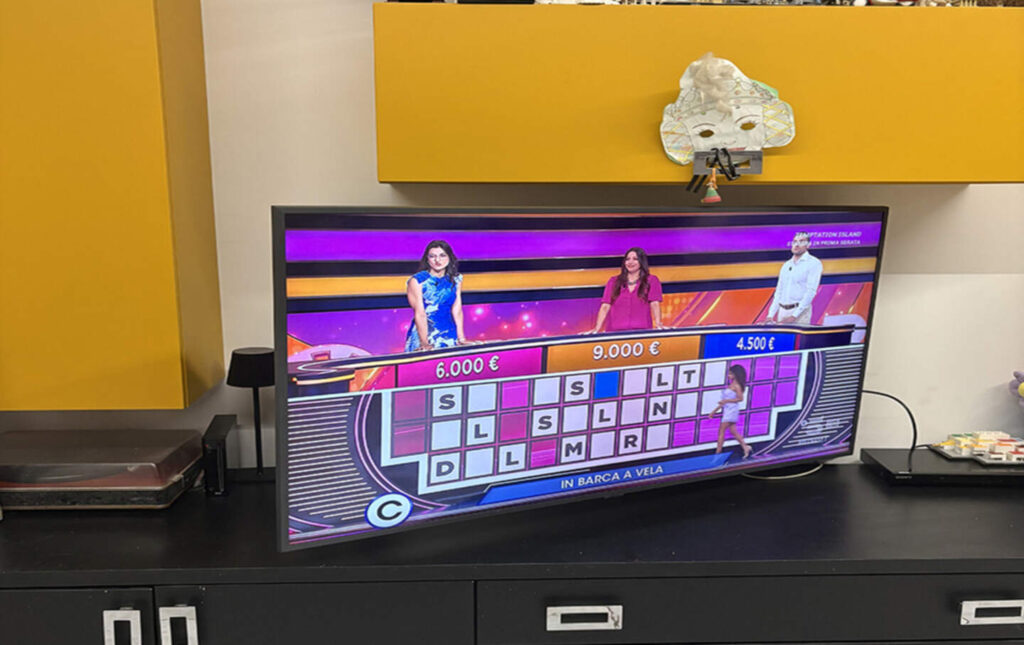
However, soon this changed. One evening my host mom put “La Ruota della Fortuna” on the television as she cleaned and moved about the house. I was stunned. They have this too? This show, the Italian version of “Wheel of Fortune,” served as a reminder of how similar we all truly are. I have watched “Wheel of Fortune” with my grandmother dozens of times, and here was the same show being that same source of comfort for an Italian family in Colonella.
I was transported back to the train, I remember the views that took my breath away. I couldn’t let this experience pass me by. While there were many apartment differences, I could embrace the underlying sameness, the mundanity that bonded us all.
“How do you say that in Italian?” I began to ask. Tablecloth, tovaglia. Watermelon, cocomero. I had this amazing opportunity to have a foot in both worlds and I began to relish in it.
This experience endowed me with a lesson that transcended borders: the importance of tolerance and patience. I returned home, back to New York City, with a transformed outlook on the experiences of immigrants. How isolatory it feels to not know the language.
According to a 2019 study done by the National Center for Biotechnology Information on the experience of Latinx immigrants in the United States, “Globally, international migrants are at elevated risk for experiencing loneliness due to separation from social networks in their countries of origin.” My previous feelings of otherness now inform how I navigate a city that, according to the American Sociological Association, “exemplifies superdiversity.”
I could now pay it forward: take a little longer when giving directions to tourists in need, be patient with those ordering in their non-native tongue, and break out my scrappy Spanish whenever I could. Even in the familiar neighborhoods, subway stops, and restaurants of my home city, new experiences awaited, and I wasn’t going to let them pass me by.